

Dressing well for the great outdoors
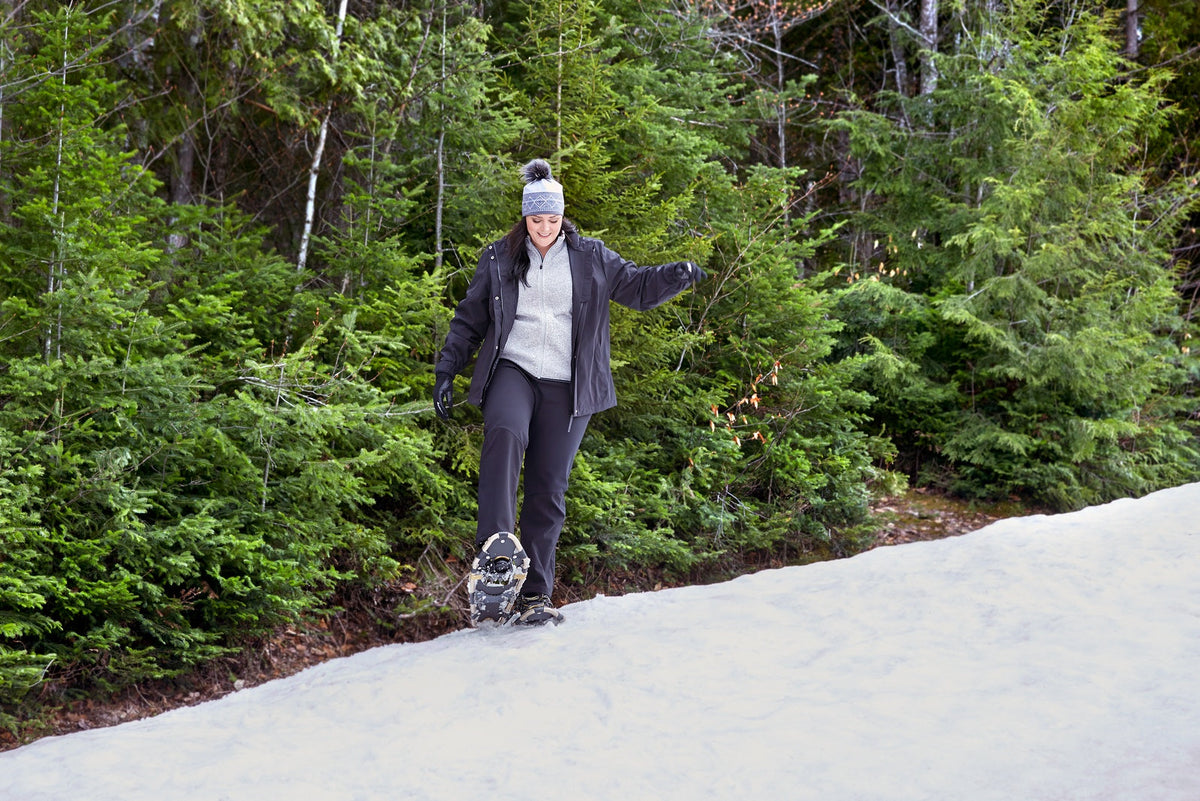
Whether you're going for a walk, heading out for a snowshoeing trip, or spending a day on the ski slopes, layering is a simple way to adapt your clothing to the weather and your activity level.
Also known as the onion principle, layering involves wearing several pieces of clothing, each with its own purpose: managing moisture, retaining heat, and protecting you from the elements. You can then add or remove a layer as needed to stay comfortable, whether you're moving a little or a lot. 💚

1. The base layer: managing moisture

This is the layer worn directly against your skin. In winter, this is often what's known as a base layer set: a top and pants worn under your other clothes.
Its main role is to help manage perspiration so you don't stay damp during your activity. In milder weather, a technical t-shirt or a lightweight merino top can also serve as a base layer.
We recommend synthetic fibres designed for performance or merino wool, choosing a weight that suits the outdoor temperature and your activity. Opt for a close-fitting cut that doesn't feel tight.
2. The mid-layer: retaining heat
This is our insulation layer: its job is to retain body heat. And that's what makes layering so practical: you can choose different types of insulation for different needs!

Fleece and wool tops
These are good choices for activities where you move more and are more likely to perspire, such as hiking uphill, snowshoeing, or cross-country skiing. They allow moisture to escape and continue to provide insulation even when damp. Fleece also has the advantage of drying quickly.
Depending on their weight, they can also be suitable for a leisurely walk in cool weather.
Synthetic insulated jackets
Their padding is made of synthetic fibres that trap air to retain heat. They retain good insulating properties when damp and generally dry faster than natural down jackets.
This is a good option when you are likely to perspire or when conditions are damp. There are lightweight models and much warmer ones: choose according to your needs.
Natural down jackets
Duck or goose down provides a lot of warmth for very little weight and compresses easily in a bag. This is practical for outings in cold, dry weather or for adding warmth during a break.
Its weakness is moisture: when wet, down loses some of its insulating capacity and takes longer to dry. So make sure to keep it dry.
3. The outer layer: protecting you from the elements
This is our protection against wind, rain, and snow. In the layering system, an uninsulated shell completes the clothing worn underneath: we adjust the warmth with our mid-layer, then the protection according to the weather.

Softshell
Often called a "softshell", it is flexible and promotes freedom of movement. It generally allows moisture to escape better during activities where you move more.
Depending on the model, it protects against the wind and withstands light rain or snow. It is well suited for outings in relatively dry weather, but does not necessarily replace a waterproof shell when precipitation persists.
Some softshells also have a lining that provides a little warmth.
Waterproof shell
Hard shell, "hardshell", waterproof-breathable jacket... it has many names, but always the same job: to protect you from the elements!
It protects against rain and wet snow while also acting as a wind barrier. It is a good option when conditions require more complete protection.
Opt for a jacket with a waterproof-breathable membrane, which prevents water from entering while allowing some of the moisture produced by the body to escape. Underarm vents are also a big plus for releasing excess heat! Even a high-end model has its limits: a hardshell is generally less breathable than a softshell, but when the rain decides to stick with you all day, you'll be glad you have it!
Fit also matters
Try your shell with the layers you plan to wear underneath. You should be able to zip up the jacket and move your arms easily, without feeling tight or compressing your insulation.
Layering in practice
Unfortunately, there is no magic formula for finding the perfect combination on the first try! At first, it's a bit of trial and error: you discover what suits you according to the weather, your activity, and your tendency to get hot or cold. Each outing helps you prepare better for the next.
For a more intense activity, a practical guideline is to dress as if it were about 5 to 10 °C warmer, taking wind and precipitation into account. Your body warms up as you move: this helps prevent you from already being too hot after ten minutes! Still, keep a warm layer close at hand for breaks.
And don't underestimate the merino wool and fleece duo: it can be surprisingly warm! Depending on the weight of the clothing and your pace, this combination may be enough while you are moving, with a shell as needed to protect you from the elements.
You don't need to find the perfect combination on the first outing. Adjust your layers along the way and remember what works for you. The goal is simply to be comfortable so you can enjoy the great outdoors at your own pace. 💚


Leave a comment
This site is protected by hCaptcha and the hCaptcha Privacy Policy and Terms of Service apply.